
UNISA website revamp & UX strategy case study
Client
Duration
Services provided
- UX Strategy
- Information Architecture
- User Experience Research
- UI/UX Design Direction
- Stakeholder Workshops
- User Journey Mapping
- UX Personas
- Competitor Benchmarking
- Accessibility Recommendations
- Google Analytics Analysis
- Website Revamp Planning
- Mobile UX Strategy
Project overview
University of South Africa (UNISA) is one of Africa’s largest distance-learning institutions, serving millions of users across prospective students, current students, researchers, academic staff, and administrative departments.
Breeze Website Designers (BWD) partnered with UNISA on a large-scale website revamp initiative aimed at modernising the institution’s digital experience across both the corporate website and MyUNISA ecosystem.
The engagement spanned over 12 months and involved extensive UX research, stakeholder engagement, analytics analysis, information architecture restructuring, UI/UX strategy, and large-scale template planning for more than 1,000 pages.
The challenge
UNISA’s existing digital ecosystem faced several challenges:
- A text-heavy and outdated interface
- Complex navigation and excessive clicking
- Poor mobile responsiveness
- Accessibility concerns
- Fragmented information architecture
- Difficulty finding qualifications and support resources
- Inconsistent visual experiences across departments and colleges
- Weak course discoverability
- Overwhelming information density
- Student frustrations around applications and registrations
Internal workshops revealed additional concerns around:
- Poor visibility of support tools
- Complicated registration journeys
- Hidden information
- Weak qualification marketing
- Long response times to student queries
- Ineffective chatbot experiences
- Lack of modern UX/UI patterns expected by today’s students
Strategic discovery process
BWD facilitated an extensive discovery and strategy phase involving multiple internal stakeholders and departments, including:
- Marketing Department
- Student Registrations
- College of Education
- College of Law
- College of Graduate Studies
- Library Services
- Internal Web Teams
- Executive Stakeholders
The discovery process included:
- Stakeholder workshops
- UX audits
- Competitor benchmarking
- User persona development
- User journey mapping
- Google Analytics analysis
- Sitemap consolidation planning
- Accessibility reviews
- SEO and discoverability analysis
Data-driven UX decisions
The redesign strategy was heavily informed by analytics and user behaviour insights.
Research identified:
- The MyUNISA portal generated over 10.8 million clicks
- Mobile users dominated overall traffic
- Admissions and qualification pages attracted the highest engagement
- Users struggled to discover non-administrative content
- Registration and application periods generated major traffic spikes
- Students heavily relied on search and direct navigation to complete tasks
Additional GA4 reporting showed:
- Over 97 million page views
- Extremely high engagement around applications and qualifications
- Significant opportunities to improve navigation, content hierarchy, and usability
These insights directly informed:
- Navigation structures
- Search improvements
- Qualification discovery
- Homepage prioritisation
- Mobile-first layouts
- CTA positioning
- Student support journeys
UX research & user personas
BWD created detailed UX personas representing UNISA’s diverse audience segments, including:
- Prospective students
- Undergraduate students
- Postgraduate researchers
- Academic staff
- Administrative staff
The personas helped shape:
- Content hierarchy
- User journeys
- Search functionality
- Mobile experience
- Accessibility improvements
- Calls-to-action
- Student support experiences
The research highlighted a recurring issue:
Users often felt overwhelmed by the amount of information on the website and struggled to quickly locate the correct qualifications, support services, and academic resources.
Information architecture transformation
One of the most important aspects of the project was simplifying UNISA’s information
architecture.
BWD proposed:
- Streamlined navigation structures
- Reduced cognitive load
- Simplified qualification discovery
- Improved categorisation
- Better search functionality
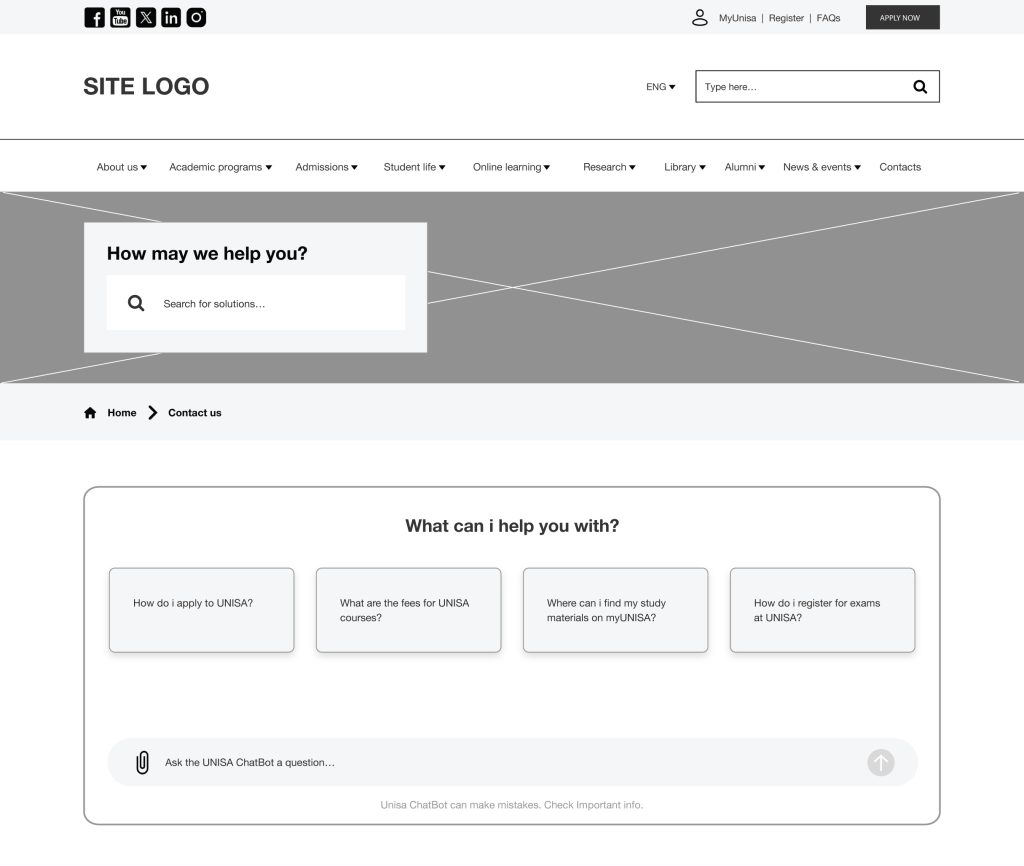
- Tile-based qualification navigation
- Improved mobile navigation
- Better visibility of FAQs and support resources
- “On This Page” navigation systems for long-form content
The project also included recommendations to reduce the sitemap footprint by approximately 40% to improve usability and maintainability.
User journey design
Detailed user journeys were mapped to better understand how different audiences interact
with the UNISA ecosystem.
These included:
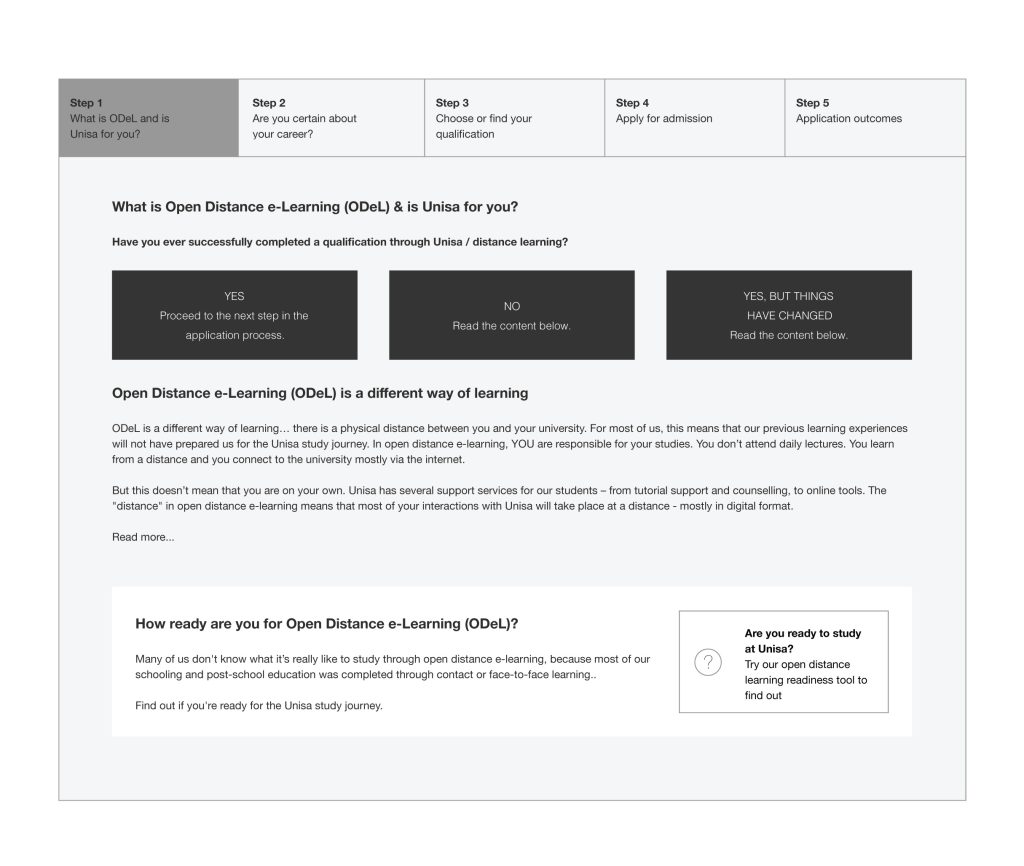
- Prospective students applying online
- Students accessing lecture notes and exam schedules
- Researchers locating journals and supervisors
- Academic staff managing course content
- Administrative staff processing applications and student records
This process helped identify friction points and opportunities to simplify critical journeys.
Competitor benchmarking
BWD benchmarked UNISA against leading local and international universities, including:
- Open University
- University of Cape Town
- University of Johannesburg
- North-West University
- National Open University of Nigeria
The benchmarking process evaluated:
- Navigation simplicity
- Content readability
- Accessibility
- Search experiences
- Visual hierarchy
- Mobile UX
- Student journeys
- Course discovery experiences
UI/UX design direction
The redesign strategy focused on creating a more engaging, student-centred digital experience.
Key recommendations included:
- Modern Visual Design
- Cleaner layouts
- Improved typography
- Better whitespace usage
- More engaging imagery
- Dynamic banners and interactive content
Mobile-First UX
- Fully responsive layouts
- Faster mobile interactions
- Touch-friendly navigation
- Improved mobile readability
Enhanced Engagement
- Explainer videos
- Interactive modals
- Improved chatbot visibility
- Progress trackers during applications
- Improved calls-to-action
Accessibility Improvements
- Better contrast ratios
- Improved keyboard navigation
- WCAG-aligned recommendations
- Better support for visually impaired users
Smarter Search & Navigation
- Predictive search functionality
- Better filtering systems
- Improved qualification discovery
- Simplified course journeys
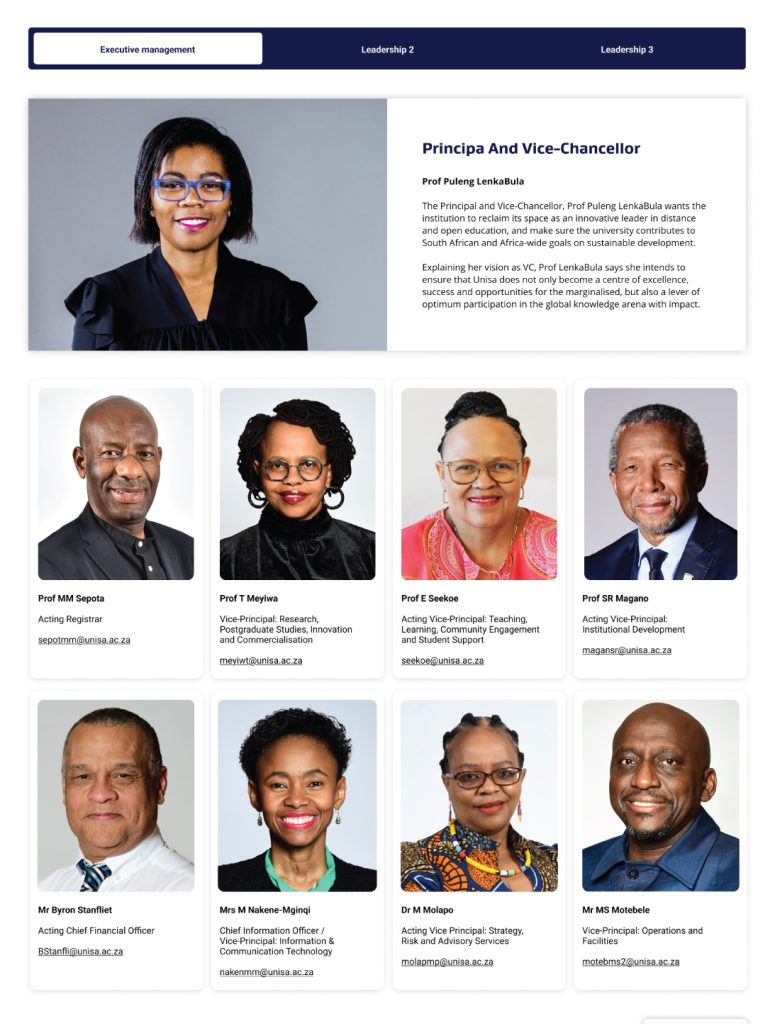
Large-scale UI system & template rollout
As part of the implementation planning process, BWD developed and coordinated a large-
scale template strategy covering:
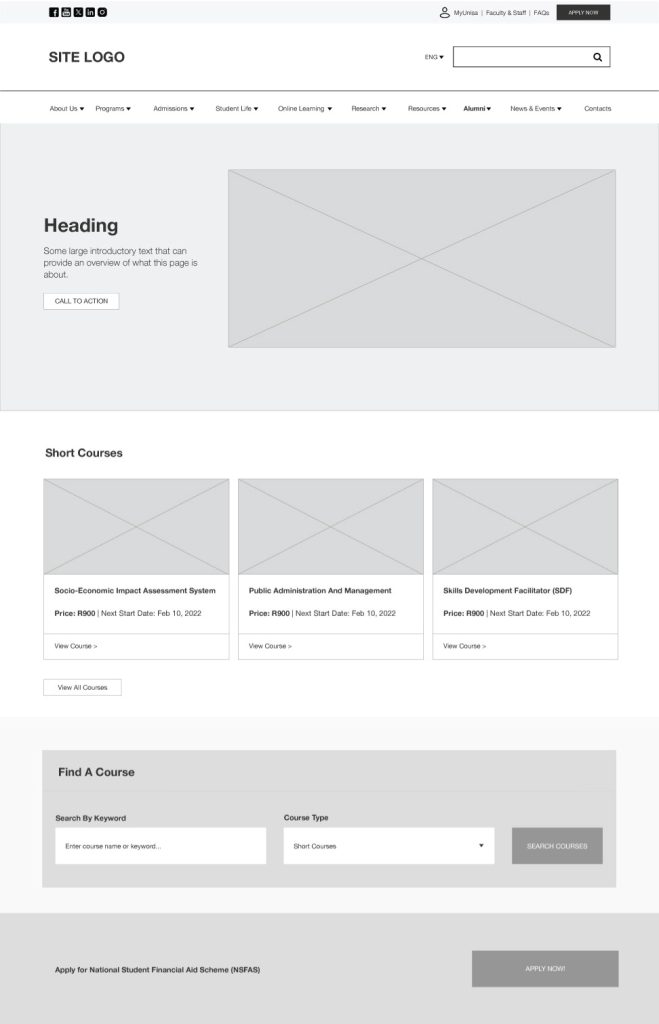
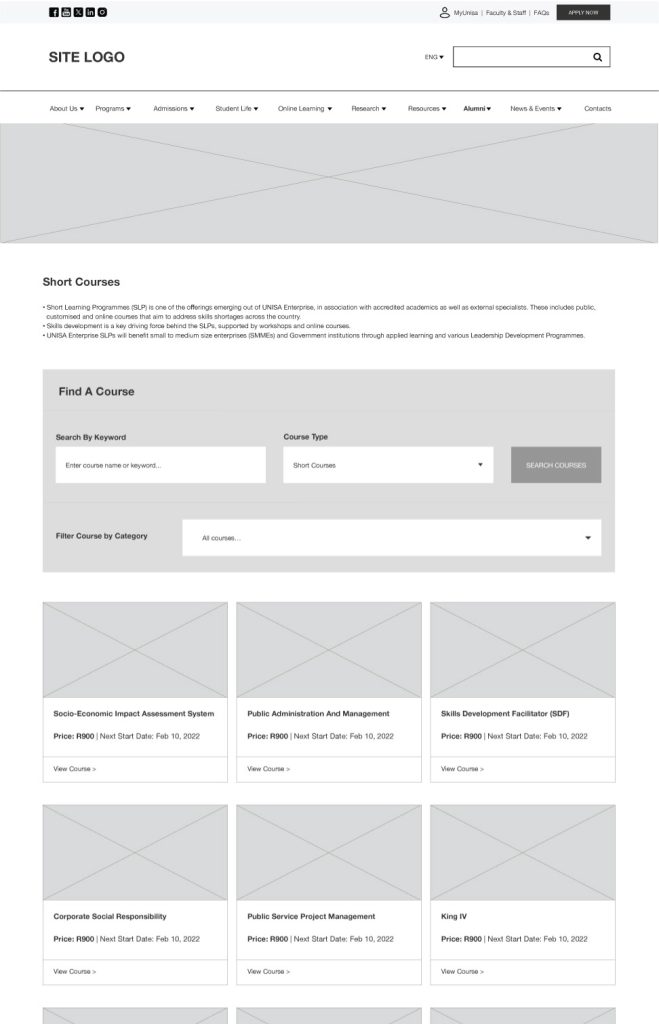
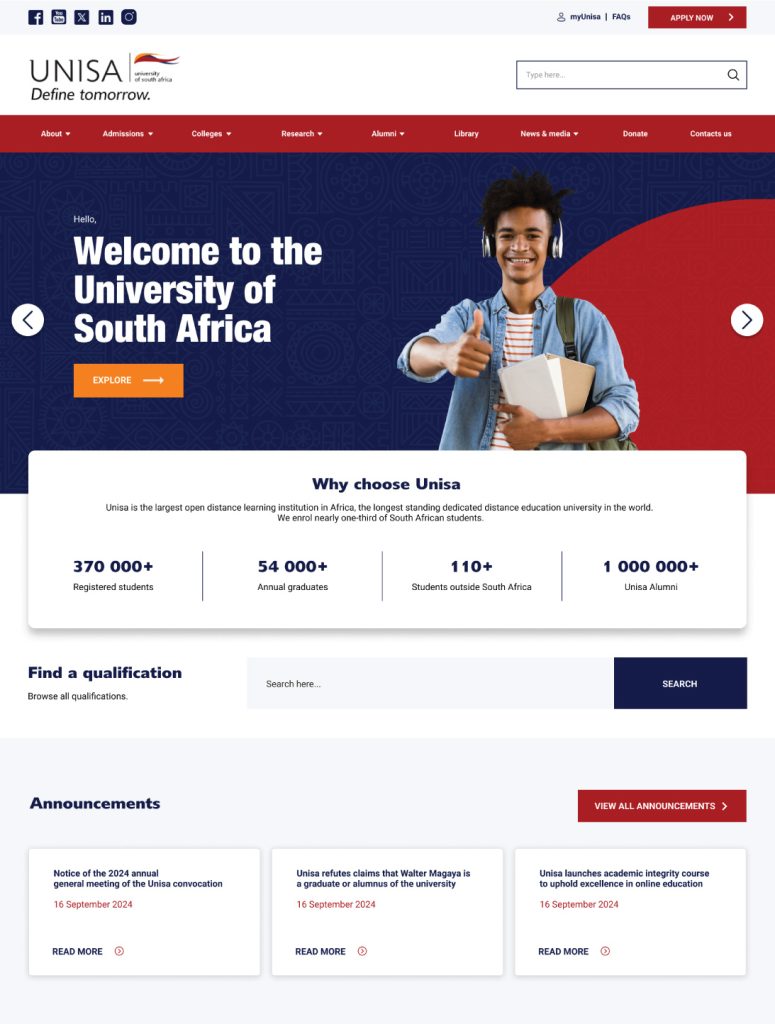
- Homepage templates
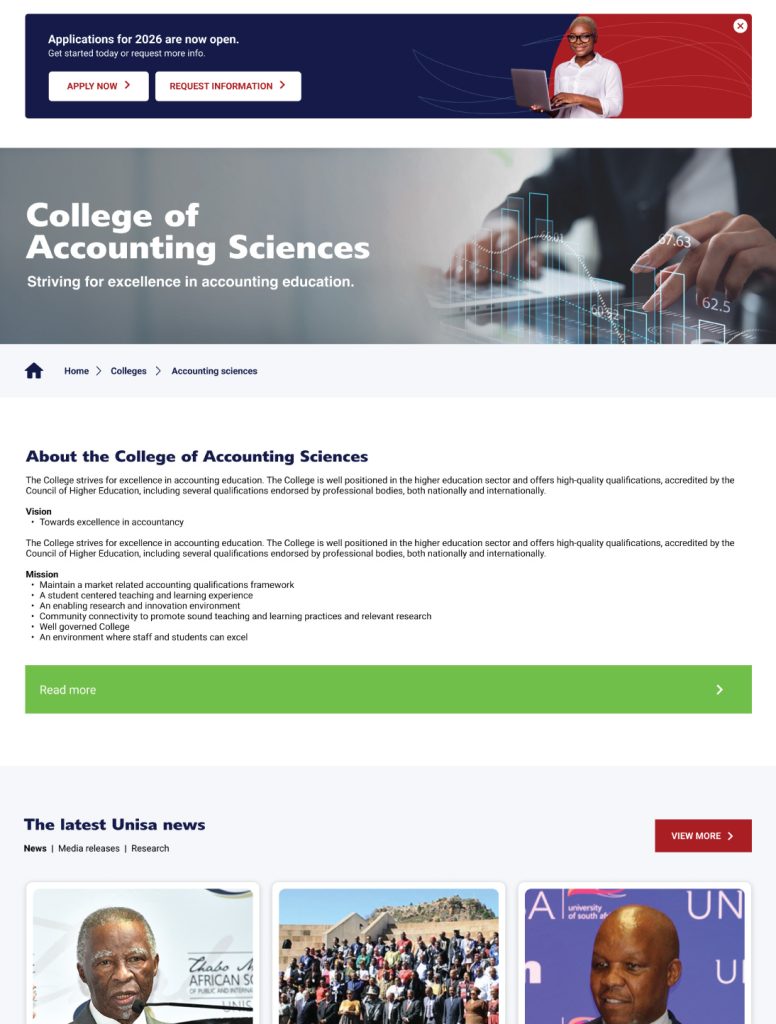
- College templates
- Qualification templates
- Research pages
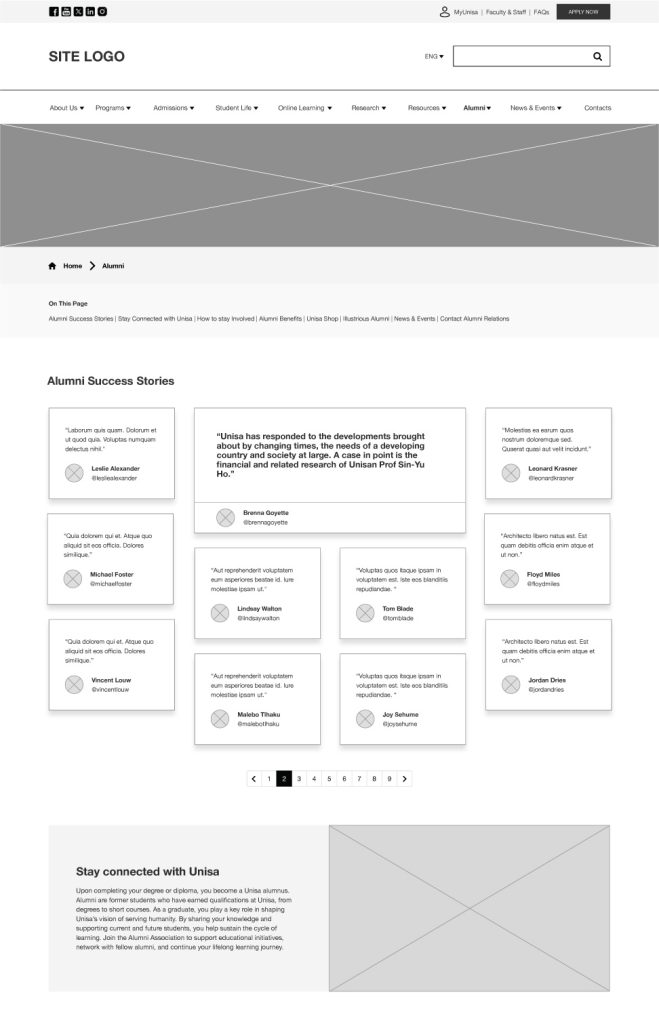
- Alumni sections
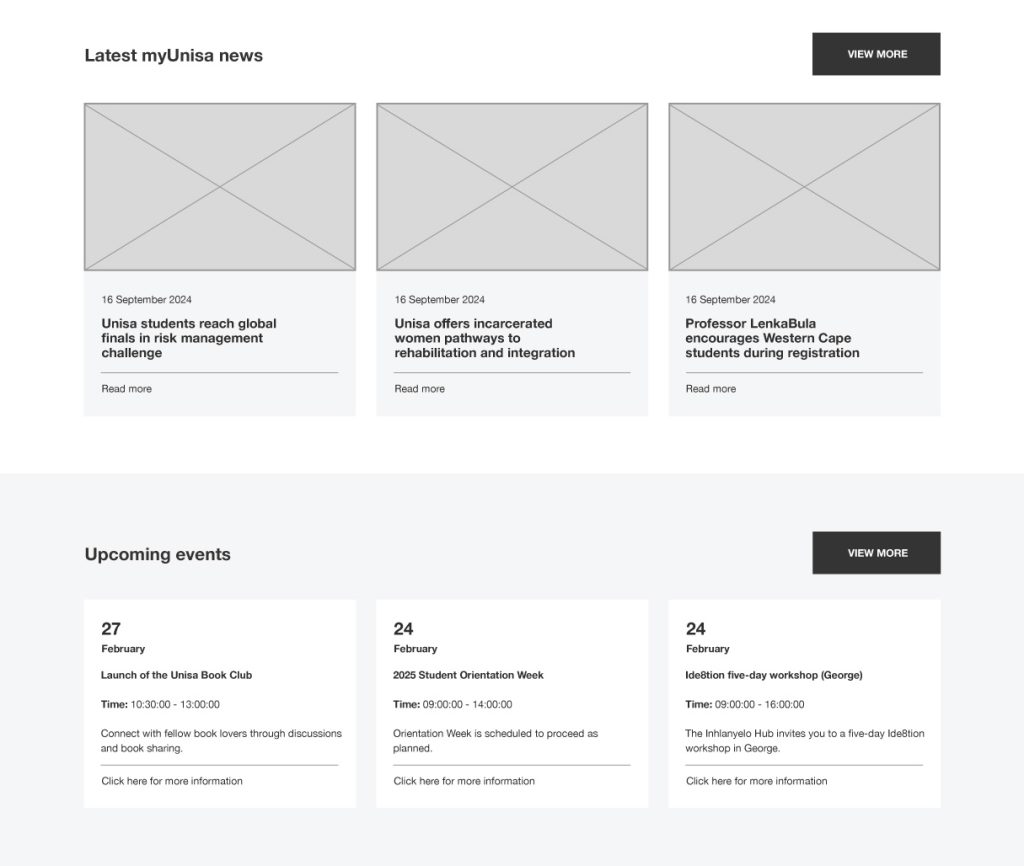
- News & media layouts
- Contact pages
- Library interfaces
- Student life sections
- Search result pages
- Academic profile templates
- myUNISA interfaces
- Mobile and responsive variations
The rollout plan covered:
- 30+ core templates
- 1,000+ pages
- Multiple colleges and departments
- Desktop, tablet, and mobile experiences
Stakeholder collaboration & iteration
The project involved continuous collaboration with stakeholders through:
- Design presentations
- Workshop feedback sessions
- Iterative UI refinements
- Accessibility discussions
- Structural reviews
- Template optimisation
Several major sections, including the Homepage, About, and Admissions pages, were approved by the client during the process.
The collaboration process also included:
- Refining college templates
- Improving research and alumni sections
- Reworking news and media layouts
- Optimising interactive experiences
- Aligning designs with UNISA’s brand and institutional goals
Outcome
The project delivered:
- A comprehensive UX strategy roadmap
- A scalable information architecture framework
- Modern UI direction
- Accessibility-focused recommendations
- Mobile-first UX planning
- Improved user journey structures
- Large-scale design system planning
- Data-driven decision making
- Enhanced qualification discovery strategies
- Improved student support and engagement concepts
Most importantly, the project laid the strategic foundation for transforming the UNISA digital ecosystem into a more modern, accessible, engaging, and student-centred platform.
Key highlights
- 12+ month engagement
- UX strategy for one of Africa’s largest universities
- Extensive stakeholder collaboration
- Analytics-driven UX decisions
- Accessibility-focused planning
- Mobile-first design direction
- 30+ template ecosystem
- 1,000+ page rollout strategy
- Multi-department digital transformation initiative
Technologies & methodologies
- UX Research
- Figma
- Google Analytics 4
- Information Architecture
- UX Workshops
- User Journey Mapping
- Accessibility Audits
- Competitor Benchmarking
- Responsive Design Strategy
- SEO &Discoverability Analysis